 19 May, 2024
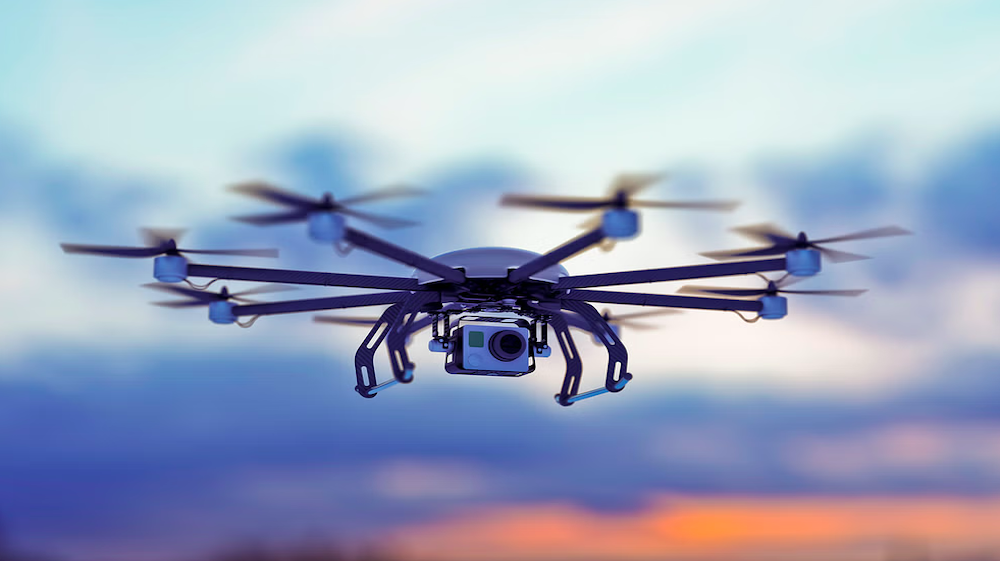
The whirring of rotors and the buzz of tiny propellers are no longer relegated to the realm of futuristic fantasies. Once confined to the hushed tones of classified military operations, these sounds now paint a vivid picture of a burgeoning revolution – the Drone Revolution. Unmanned Aerial Vehicles (UAVs), or simply drones, are rapidly transforming the landscape above us, soaring beyond battlefield boundaries to become a ubiquitous presence in our skies.
This revolution is not merely a change in soundscape; it’s a complete overhaul of how we interact with the airspace. Drones are no longer just tools of war; they are evolving into invaluable assets for a plethora of industries. From the bustling world of logistics and delivery to the vast fields of agriculture and the harrowing aftermath of disaster relief efforts, drones are proving their versatility and rewriting the script on efficiency and innovation.
The concept of unmanned aerial vehicles has existed for decades. Early iterations during World War I were rudimentary, often tethered observation balloons or rudimentary flying machines. However, advancements in technology during the latter half of the 20th century paved the way for more sophisticated drones. The Vietnam War saw the first widespread use of military drones for reconnaissance missions. These early drones, often called UAVs (Unmanned Aerial Vehicles), provided valuable intelligence without risking human pilots in hostile airspace.
The emergence of armed drones, also known as Unmanned Combat Aerial Vehicles (UCAVs), marked a significant shift in warfare. The first combat drone strikes occurred in the late 1990s and early 2000s. This technology offered several advantages, including the ability to engage targets with greater precision and reduced risk to military personnel. Drones also provided persistent surveillance capabilities in remote locations, offering crucial intelligence for ground troops.
The use of military drones has been a source of much debate. Critics raise concerns about civilian casualties, the potential for dehumanization of warfare, and the proliferation of this technology in the hands of less responsible actors. Nevertheless, drones have become an integral part of modern warfare, and their capabilities continue to evolve. Today, military drones come equipped with advanced weaponry, sophisticated sensors, and long-range endurance, making them a powerful force on the battlefield.
While military applications dominated the early years of drone technology, the past decade has witnessed a dramatic rise in civilian uses for drones. This expansion is driven by several factors, including:
The civilian drone industry encompasses a diverse array of applications. Here are some prominent examples:
Despite the vast opportunities presented by drone technology, several challenges remain:
The drone revolution is still unfolding, and the future holds immense possibilities. Advancements in technologies like artificial intelligence (AI) and autonomous navigation will further enhance drone capabilities. Here are some potential future directions:
To realize the full potential of drones, collaboration between stakeholders like governments, industry leaders, and researchers is essential. Regulatory frameworks need to be flexible enough to foster innovation while ensuring safety and addressing ethical considerations.
Moving forward, the focus should be on developing drone technology ethically and sustainably. Here are some key considerations:
The drone revolution has fundamentally changed our perspective on aerial operations. From their military origins to their burgeoning civilian applications, drones are transforming industries and redefining possibilities. As we move forward, the key lies in harnessing the power of this technology responsibly and ethically.
The drone industry, once dominated by military applications, is experiencing a meteoric rise in the civilian sector. This surge is fuelled by advancements in technology, decreasing costs, and a growing range of applications. As a result, the global drone market presents a wealth of exciting opportunities, with analysts predicting significant growth in the coming years.
Current Market Value: Estimates suggest the global drone market reached a value of USD 22.4 billion in 2022 [SkyQuestT report, 2024].
Growth Predictions: The market is expected to witness exponential growth, with projections ranging from a Compound Annual Growth Rate (CAGR) of 13.9% (Grand View Research, 2023) to a staggering 27% (Spherical Insights, 2023). This translates to a potential market size exceeding USD 166.7 billion by 2031 (SkyQuestT report, 2024) or even USD 260 billion by 2030 (Spherical Insights, 2023).
Several factors are fueling the drone market’s growth:
The drone market offers lucrative opportunities across various segments:
Market growth is expected to be strongest in:
The drone sector is poised for significant growth, presenting a wealth of opportunities for businesses and investors. By capitalizing on technological advancements, developing innovative applications, and navigating evolving regulations, companies can thrive in this dynamic market. The future of drones is bright, and the sky’s the limit for their potential to revolutionize various aspects of our lives.