Global Human Capital Development Council (GHCDC)
is dedicated to advancing a sustainable and inclusive human capital
ecosystem that empowers individuals, organizations, and communities
through equitable access to growth opportunities and skill development.
The council emphasizes strategic collaboration with a broad spectrum of
partners—including educational institutions, businesses, governments,
and non-profits—to uplift job readiness, enhance skill accessibility,
and foster economic resilience. GHCDC is committed to enabling lifelong
learning, promoting workforce adaptability, and driving prosperity
across all demographics, equipping both individuals and communities to
thrive in a rapidly changing global economy.
Inclusive Human Capital Ecosystem: GHCDC seeks to build an inclusive ecosystem that ensures equal access to skill development, career opportunities, and resources, meeting the needs of both individuals and organizations.
Equitable Talent Development: The council envisions promoting equitable growth in talent development by addressing disparities in access to education, training, and career advancement across different demographics.
Transformative Growth: GHCDC aims to lead transformative growth within human capital development, fostering a dynamic, outcome-driven approach to skill building and workforce empowerment.
Commitment to Diversity, Equity, and Inclusion (DEI): A core focus of GHCDC is on promoting DEI within the human capital landscape, striving to create diverse talent pipelines and eliminate structural barriers faced by underrepresented groups.
Strategic Collaboration: GHCDC places a strong emphasis on partnership, working closely with governments, educational institutions, businesses, and non-profit organizations to maximize the impact of human capital initiatives.
Elevate Workforce Quality: GHCDC is committed to improving the quality of the workforce by advocating for fair compensation, supportive work environments, and opportunities for ongoing skills enhancement and career development.
Sustainable Economic Growth: The council actively contributes to sustainable economic growth by preparing the workforce with the competencies and skills essential for evolving industries and emerging job markets.
Empowering Youth and Adults: GHCDC focuses on lifelong learning and skills enhancement for individuals of all ages, ensuring that both youth and adults have the tools necessary for sustainable careers and economic resilience.
Data-Driven Human Capital Development: GHCDC champions data-driven approaches in talent development, utilizing insights to drive targeted initiatives, informed decision-making, and impactful results.
Innovation in Human Capital Strategies: GHCDC promotes the use of new technologies and innovative practices in human capital development, such as AI-powered learning platforms, skill-matching algorithms, and virtual training solutions.
Accessibility and Inclusion: The council is dedicated to making skill development and career growth accessible to everyone, regardless of socioeconomic status, location, or background.
Global Reach and Impact: GHCDC operates with a commitment to making a positive global impact, helping shape a world where human capital development is a catalyst for social and economic progress.
Through these objectives and collaborative efforts, the Global Human Capital Development Council aims to create a robust, inclusive, and forward-thinking human capital ecosystem that elevates individuals, enhances organizational capacity, and contributes to a more prosperous, innovative, and equitable global economy.
It was clear that action at the national level would be required to accomplish the aspirations and pledges. Through effective constituencies, the alliance is dedicated to increase collective advocacy efforts, sharpen the effectiveness of commitments, and ensure that they are linked with countries’ interests and plans.
We’ve brought different stakeholders together to form an inclusive partnership framework that produces real, collective action at the international level, as well as, increasingly, at the national level.
We acknowledge that a broader range of players, including the commercial sector, research and learning institutions, and civil society organisations, can make substantial contributions to achieve the alliance's objectives.
We’ve significantly enhanced alliance’ interaction with one another, laying the groundwork for development toward a shared vision.
We’re tightening up accountability procedures, and commitments made by governments and donors are starting to find their way into national policies, procedures, and structures.
Stakeholders and people hold each other accountable
The Alliance strategy relies on people who are ready to think, lead, and act outside of their own organisational and sectoral silos, and who have the attitude and convening power to bring all stakeholders together. Individual champions and focal points displaying this bold manner of working should be cultivated and publicly honoured; this is a new strategy that demands active cultivation and continual support from alliance members.
The alliance’s driving element is national engagement; global and regional frameworks support this national participation. The cooperation should evolve and continue to attract additional partners. Such expansion will be an indication of strong collaboration, but it is not a strategic goal in and of itself. A variety of elements, including government leadership, in-country presence of alliance partners, degree of participation of focal points and champions, and Secretariat capacity, will continue to influence the partnership’s ability to engage in each nation.
Global Leaders Group HIGH-LEVEL ADVOCACY (High-Level Chair)
Secretariat SUPPORT (Chief Executive Officer)
Steering Committee STRATEGIC LEADERSHIP (Chair of the Steering Committee and Members)
Work Groups ACTION
Partners ACTION (Governments, Civil Society Organizations, External Support Agencies, Private Sector, Research & Learning Institutions )

The Steering Committee is alliance's highest decision-making body, with representatives from all constituencies. The global leadership group is a high-level group of alliance leaders who fight for and mobilise greater political commitment to the alliance's Guiding Principles and goals. A High-Level Chair leads the Council. The Secretariat assists the Steering Committee in putting the alliance Strategy, roadmaps, and workplans into action. Each alliance constituency should have one focal point in each partner country, whose job it is to increase country-level involvement and coordinate the particular constituency at the national level.

Political, technical, logistical, advocacy, and strategic functions are all needed to carry out the partnership's agenda. Wherever possible, these functions are laid out in the alliance partnership Results Framework and associated workplans. The goal of the alliance Secretariat is to assist alliance partners in implementing the strategy. All alliance partners share responsibility for the strategy's implementation. The alliance Secretariat and its high-level Chief Executive Officer are well-resourced to ensure that all partners, partnership activities, and governance structures are well-coordinated and supported.

In accordance with the alliance partnership Results Framework, each entity in the alliance structure shall design its own workplan. The alliance Secretariat will be instrumental in assisting constituencies, regions, and cross-contituency Work Groups in developing these workplans. As outlined in the Results Framework, a similar set of indicators will be used throughout. The Global Leadership Council, the alliance Steering Committee, the secretariat, partners, and constituency groups will all benefit from independent annual partnership health-checks of partnering efficacy.

High-level management of this approach is provided by the alliance partnership Steering Committee and its two sub-committees, which include annual performance reviews and revisions to the alliance partnership Results Framework. This learning and review process necessitates a robust knowledge management function that draws on evidence of what works and doesn't work in practise, including both quantitative data and contextual narrative, as well as self-reported and third-party inputs. To improve accountability and maintain a focus on course corrections while also finding, discussing, and celebrating successful practises, the process must stay open and transparent.
The values partners have in common and that guide all joint action

Multistakeholders efforts are collaborations between businesses, civil society and other stakeholders that seek to address issues of mutual concern, including human rights and sustainability. All hands must be on deck to achieve the 2030 Agenda for Sustainable Development and the Sustainable Development Goals. It necessitates the collaboration of various sectors and players by pooling financial resources, information, and skills. Cross-sectoral and innovative multi-stakeholder partnerships will play a critical role in getting us to where we need to be by 2030 in our new development era, with 17 intertwined Sustainable Development Goals and 169 associated targets serving as a blueprint for achieving the sustainable Future We Want. Governments, intergovernmental organisations, major groups, and other stakeholders voluntarily undertake multi-stakeholder initiatives for sustainable development, with the goal of contributing to the implementation of intergovernmentally agreed development goals and commitments, as well as the 2030 Agenda for Sustainable Development.

It is the practice of reducing your demand for natural resources by making sure that you replace what you use to the best of your ability. It is made up of three pillars: the economy, society, and the environment. We work with businesses to integrate sustainability into every aspect of their operations so they may develop new sources of value and live according to their ideals. Organizations must now demonstrate that they are purposeful about sustainability, hold strong ethical standards, and operate responsibly in everything they do as stakeholders demand more environmental, social, and governance (ESG) efforts, regulations tighten, and consumers increasingly expect brands to take action. Companies and brands are increasingly looking to their partners—as well as technology and innovation—to help them incorporate sustainability and make substantial changes that benefit business, society, and the environment. Now is the time for collaboration—for business to join forces with government and society to reinvent, rebuild, and reshape our global economy so that everyone benefits.

The primary, transformative promise of the 2030 Agenda for Sustainable Development and its Sustainable Development Goals is to leave no one behind (LNOB) (SDGs). It expresses all UN Member States' resolve to end poverty in all of its forms, eliminate discrimination and exclusion, and reduce inequities and vulnerabilities that leave people behind and weaken individual and collective potential. The pledge to leave no one behind is a commitment to act explicitly to ensure that those who have been left behind can catch up to those who have experienced greater progress. Extremely impoverished and marginalised groups are sometimes invisible, and as a result, development programmes are frequently disregarded. As a result, individuals who might most benefit from economic improvements brought about by development programmes are left out. But who are these people who are currently being left out of development programmes? And how can we be sure that our own initiatives reach the people who need them the most? These are some of the topics we debate in the Leave No One Behind Platform, along with others.

Transparency ensures that information is available that can be used to measure the authorities' performance and to guard against any possible misuse of powers. In that sense, transparency serves to achieve accountability, which means that authorities can be held responsible for their actions.

Evidence-based decision making is a process for making the best decisions possible using the evidence available. It avoids decision making that is based on gut feeling, intuition, or instinct and instead relies on data and facts.

Ownership: Developing countries are in charge of their own progress. Alignment: Development assistance must be in line with the policies, structures, and procedures of the recipient countries. Harmonization: Development partners of donor nations must coordinate their efforts. Managing for results: Management must be focused on achieving objectives. Mutual accountability: All parties must be held accountable to each other.
Access exclusive resources, connect with experts, and contribute to space economy
Per Yearly

Per Yearly
Per Yearly
Per Yearly
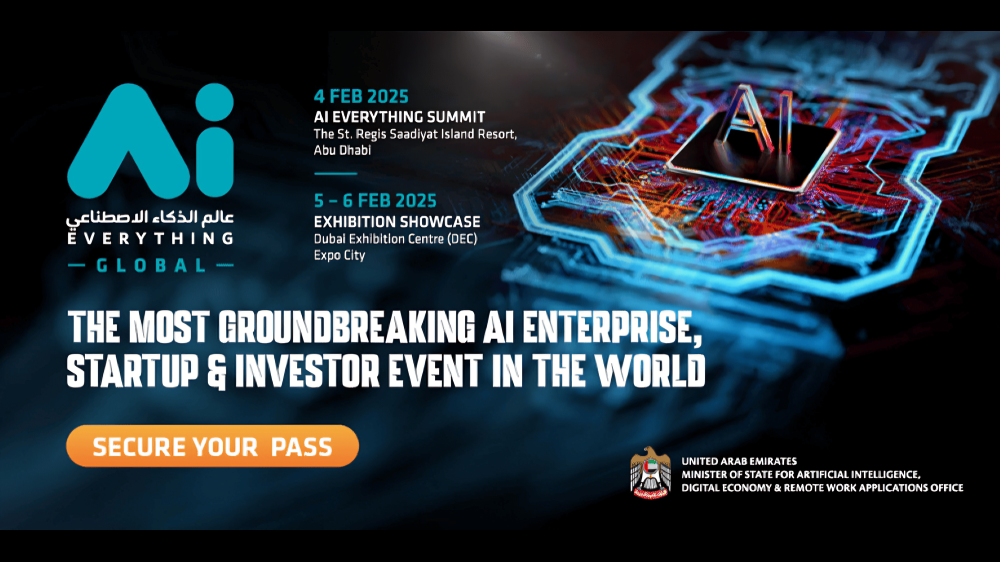
 5 Dec, 2025 - 12 Dec, 2025
Ai Everything GLOBAL, the world’s most revolutionary AI event takes place for the first time across two international capitals of AI investment and emerging technologies development —Abu Dhabi and Dubai. With the UAE standing proud as an influential and impactful global innovation hub

 6 Dec, 2025 - 9 Dec, 2025
2025 isn't the year to sit back and watch - it's the year to act! While the world debates the future of sustainability, Europe is doing what it does best: making
 29 Nov, 2025 - 16 Dec, 2025
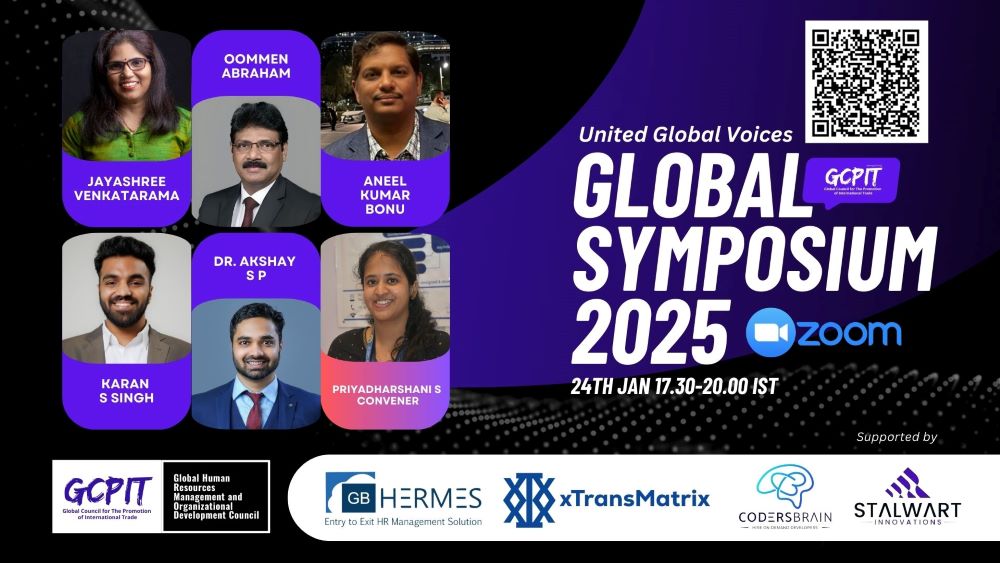
The Global Symposium 2025 is a flagship initiative by the Global Council for the Promotion of International Trade (GCPIT), designed to foster meaningful dialogue and collaboration across diverse industry verticals. This forward-looking platform hosts a series of webinars, uniting global thought lead
Visionary Voices: Shaping the Future of the Space Economy
Visionary Voices: Shaping the Future of the Space Economy